
Is Your Dog’s Reactivity Connected to Physical Discomfort?
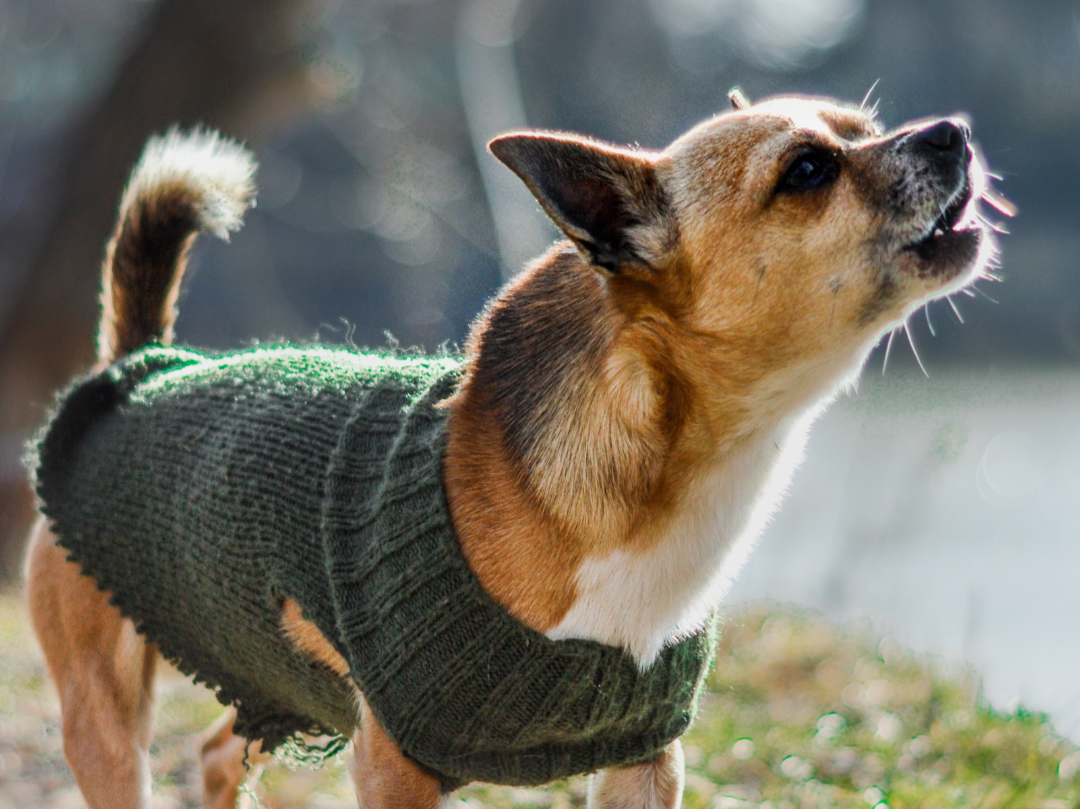
When a dog is frequently barking, lunging, growling, snapping, or avoiding touch, it’s really easy to treat the behavior as the entire problem. Lots of dog owners focus on obedience, socialization, or controlling the reaction without asking what the dog’s body is experiencing.
But can pain cause aggression in dogs? Yes!
Pain and physical discomfort can trigger defensive behavior or make an existing reactivity problem more intense. They are not the only possible causes of aggression, but they deserve serious consideration, especially when a dog’s behavior changes suddenly or appears connected to movement, handling, or touch.
Understanding the body-behavior connection does not replace veterinary care or professional behavior support. It gives owners another valuable piece of information to bring into the conversation.
Can Pain Cause Aggression in Dogs?
Pain can contribute to aggression when a dog feels threatened, anticipates discomfort, or tries to prevent someone from touching a sensitive area.
Research supports a meaningful connection between physical health and canine behavior.
A review of pain and problem behaviors found that painful conditions may be involved in a significant portion of dogs referred for behavioral concerns.
The relationship can be complex because pain may create a new behavior, intensify an existing response, or make a dog less able to cope with everyday stress.
Aggression is not a diagnosis by itself. Instead, it’s a category of behavior that may include growling, snarling, snapping, lunging, or biting. These behaviors can occur for many reasons, including fear, frustration, resource guarding, previous learning, medical conditions, and pain.
Physical discomfort should therefore be considered as one part of a complete assessment rather than assumed to be the sole explanation.
Discomfort Can Change a Dog’s Behavior
A dog in pain may have less physical and emotional room to manage stress.
Imagine that a dog already feels stiff through the hips or sore along the back. A child leaning over the dog, another dog bumping into them, or a person reaching toward the sensitive area may feel more threatening than it would on a comfortable day.
The resulting growl or snap may be an attempt to create distance and protect the body.
Pain can also affect behavior before anyone touches the dog. Dogs can remember that climbing into the car hurts, putting on a harness pulls across a sensitive area, or that playing with another dog makes whatever hurts, hurt more.
In these cases, what looks like an excessive response may be the dog trying to avoid a physical experience they expect to be unpleasant.
Reactivity and Aggression Are Not Exactly the Same
Reactivity describes an intense response to a trigger. Reactive dogs typically bark, lunge, spin, freeze, whine, or become highly alert around dogs, people, vehicles, sounds, or unfamiliar environments.
Aggression refers more specifically to behaviors that threaten or cause harm, including growling, snapping, and biting.
Reactive behavior can look aggressive, but not every reactive dog intends to engage in conflict. Many of them are trying to avoid it.
Cornell University describes reactive dogs as becoming highly aroused and preoccupied with a trigger, sometimes to the point that they are difficult to redirect or move away. Fear, previous experiences, genetics, learning history, and limited socialization may all play a role.
Physical discomfort can be another layer within that picture. It may not create the original fear or frustration, but it can reduce the dog’s tolerance and make the response happen faster.
How Physical Tension Fits Into the Picture
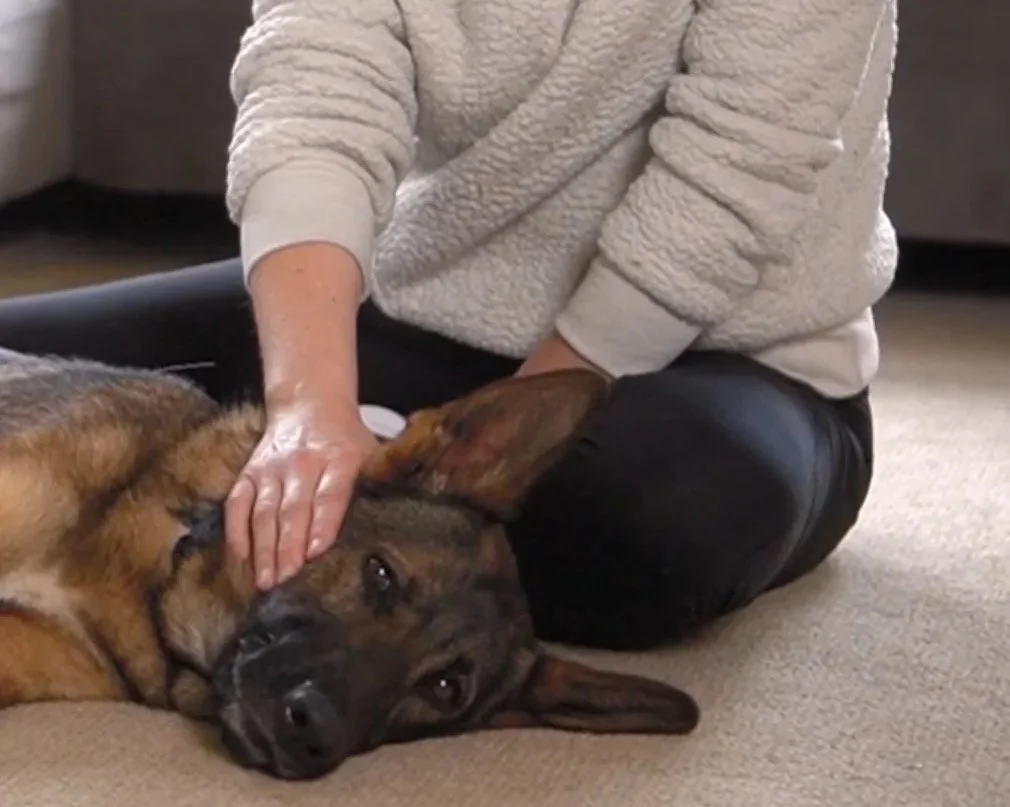
Muscle tension is not proof that a dog is injured or in pain. Dogs naturally tighten their bodies when preparing to run, play, protect themselves, or respond to something in the environment.
However, repeated or persistent tension can provide useful information.
You’ll see reactive dogs brace through the neck, shoulders, back, jaw, or hindquarters when a trigger appears. Over time, repeatedly moving through this tense posture may influence how freely the dog uses the body.
Physical discomfort creates a cycle in which tension and emotional stress affect one another.
This is why owners should observe patterns rather than judging one isolated moment.
Does the dog remain tense long after the trigger has passed?
Does one side of the body seem tighter?
Has their stride changed?
Do they resist certain movements or types of touch?
These observations cannot diagnose a physical condition, but they can help an owner give a veterinarian or qualified professional more specific information.
Physical Signs Worth Discussing With Your Veterinarian
A dog experiencing discomfort might not whine, limp dramatically, or refuse to move. Behavioral changes usually appear before an owner recognizes a clear physical problem.
Signs that deserve attention include:
Sudden growling, snapping, or irritability
Reactivity that has recently become more intense
Avoiding touch in a particular area
Flinching, skin twitching, turning toward the hand, or moving away
Difficulty getting up, lying down, climbing stairs, or entering the car
Changes in gait, posture, or weight distribution
Reluctance to jump, play, or participate in familiar activities
Sensitivity when a collar, harness, or coat is put on
Restlessness or difficulty settling
Changes in sleep, appetite, grooming, or social behavior
Guarding part of the body
Aggression during handling that was previously tolerated
A 2024 review examining aggression and physical health concluded that a physical-health assessment should be included when evaluating canine aggression because medical conditions can either trigger aggression or aggravate an existing problem.
A sudden personality or behavior change should always be taken seriously. The first step is a veterinary examination, not an attempt to correct the warning behavior.
Punishing a Growl Can Make the Situation More Dangerous
A growl is information. It tells us that the dog is uncomfortable enough to ask for distance.
Punishing the growl may stop the sound without resolving the fear, pain, or conflict underneath it. The dog will then feel that subtler communication is ineffective and move more quickly toward snapping or biting.
This does not mean owners should ignore unsafe behavior. Management is essential. Distance, barriers, leashes, muzzles conditioned through positive reinforcement, and changes to the dog’s environment may all be needed to protect the dog, other animals, and people.
The goal is to reduce risk while investigating why the behavior is occurring.
Research reviews recommend humane approaches such as desensitization and counterconditioning for fear and aggression, along with handling practices that minimize restraint and help animals feel safer.
What to Do When Pain-Related Aggression Is Possible
Start by preventing situations in which the dog may feel forced to defend themselves. Do not repeatedly touch a sensitive area to test the response, and do not place the dog in close contact with known triggers simply to see what happens.
Schedule a veterinary evaluation and share specific observations. A short record can be helpful:
What happened immediately before the reaction?
Was the dog touched, approached, moved, startled, or restrained?
What part of the body was involved?
Did the dog appear stiff before or afterward?
Does the reaction occur at a particular time of day?
Has the dog’s movement, sleep, appetite, or activity changed?
Is the behavior new, or has a familiar behavior recently escalated?
Video can also be useful when it can be captured safely and without provoking the dog. Record ordinary movement or naturally occurring behavior rather than intentionally recreating a dangerous situation.
Where Canine Bodywork Can Help

Canine bodywork should not be used to diagnose the cause of aggression or replace veterinary treatment.
It can, however, help educated owners become more observant of posture, movement, tissue response, compensation, and changes in their dog’s comfort.
Gentle, consent-based touch may also provide supportive care for an appropriate dog after medical concerns have been evaluated and the approach has been cleared by the dog’s veterinarian.
The key word is consent. A dog who freezes, turns away, tightens, licks their lips, leaves, growls, or otherwise asks for space should not be held in place and worked on.
A thoughtful approach begins with observation and allows the dog to participate voluntarily. For dogs with a bite history or significant handling sensitivity, owners should work within a professional safety plan rather than attempting hands-on techniques alone.
Learn to Observe Your Dog’s Body More Closely
Canine Bodywork Online teaches dog owners how to better understand canine anatomy, movement, tension patterns, and supportive hands-on care.
The goal is not to diagnose your dog or replace their veterinarian. It is to help you become a more informed member of your dog’s care team, notice meaningful changes earlier, and approach the body with greater knowledge and respect.
Explore Canine Bodywork Online and begin learning how the canine body can influence comfort, movement, and everyday behavior!
Frequently Asked Questions
Can pain make a normally friendly dog aggressive?
Yes. A normally social dog may growl, snap, or bite when experiencing pain, particularly when touched, approached, moved, or startled. Sudden aggression warrants a veterinary examination because injuries and medical conditions may contribute to behavioral changes.
What does pain-related aggression look like in dogs?
Pain-related aggression may occur during handling, grooming, play, movement, or contact with a sensitive area. Owners may also notice stiffness, avoidance, guarding, restlessness, reduced activity, or changes in posture and gait.
Does reactivity always mean a dog is in pain?
No. Reactivity can be influenced by fear, frustration, genetics, previous experiences, learning history, the environment, and many other factors. Pain may create, intensify, or coexist with reactivity, which is why both physical health and behavior should be considered.
Can canine massage stop aggressive behavior?
Canine massage is not a treatment for aggression. Aggression requires appropriate safety management and may require veterinary and behavioral assessment. Supportive bodywork may be considered only when medically appropriate, safely performed, and accepted by the dog.
Should I touch my dog to find where they hurt?
Do not repeatedly press, manipulate, or test sensitive areas, especially if the dog has growled, snapped, or bitten. Record the circumstances surrounding the behavior and arrange a veterinary evaluation.