
What if My Dog Won’t Sit Still for Canine Massage?
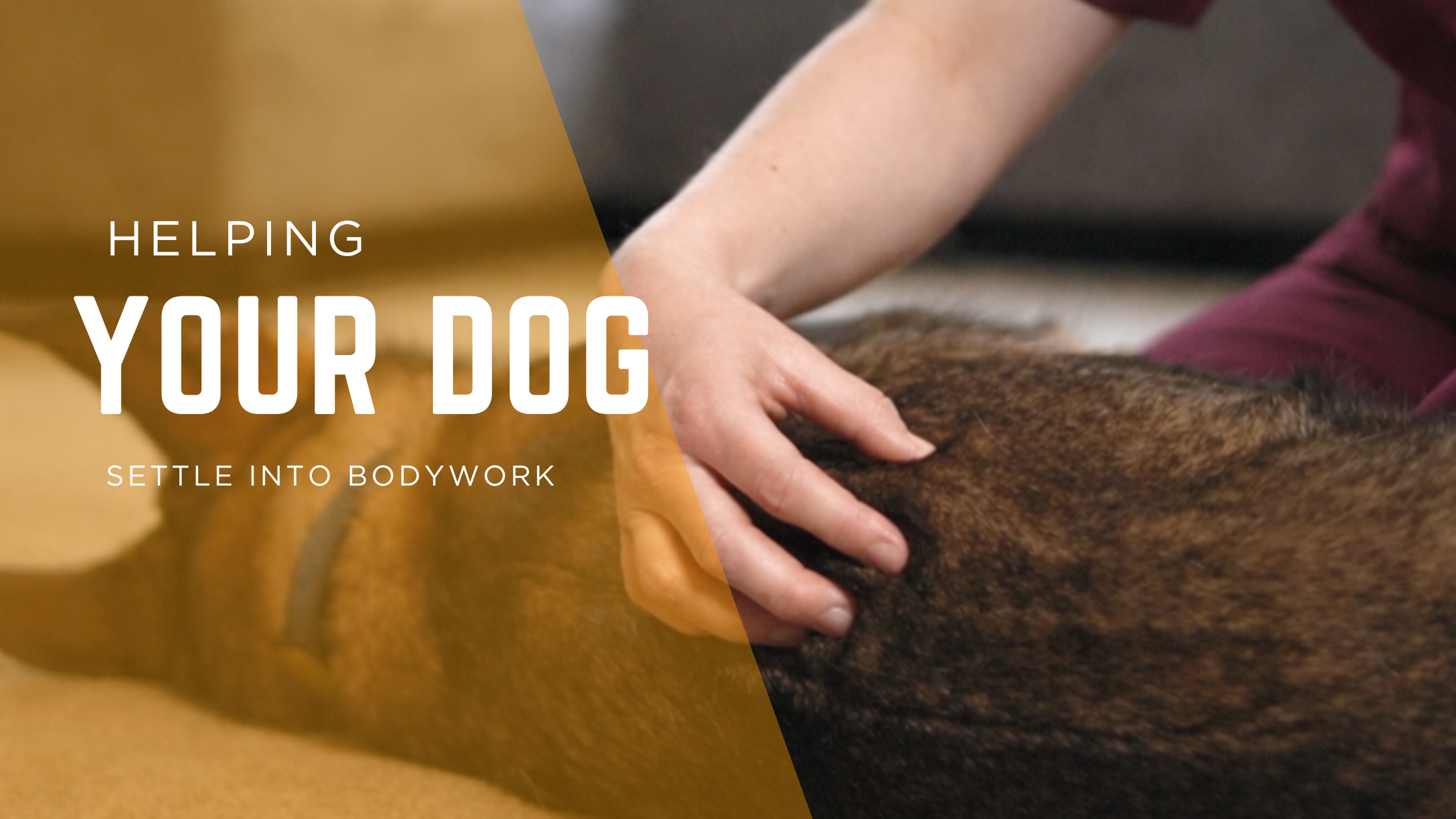
One of the most common concerns people have about trying canine massage at home is that their dog simply will not sit still for it.
That concern makes sense, especially if you have a young dog, a high-energy dog, or a dog who seems to treat every quiet moment to start a game of tug. Some dogs will happily lie beside you for twenty minutes while you work with them. Others will get up, circle around, bring you a toy, wander off, come back, and then change their mind again.
That does not mean canine massage is only for naturally calm dogs.
It does mean that the way you introduce bodywork matters.
The goal should never be to convince a dog to tolerate a long session just because that is what we imagine massage is supposed to look like. A much better starting point is learning how your dog responds to touch, giving them room to participate at their own pace, and allowing the session to develop over time.
Canine Massage Does Not Require a Perfectly Still Dog
When people picture massage, they often picture stillness. We tend to imagine a dog stretched out comfortably while someone works methodically across the entire body from beginning to end.
That can certainly happen, but it is not a requirement for canine massage, particularly when a dog is still learning what the experience means.
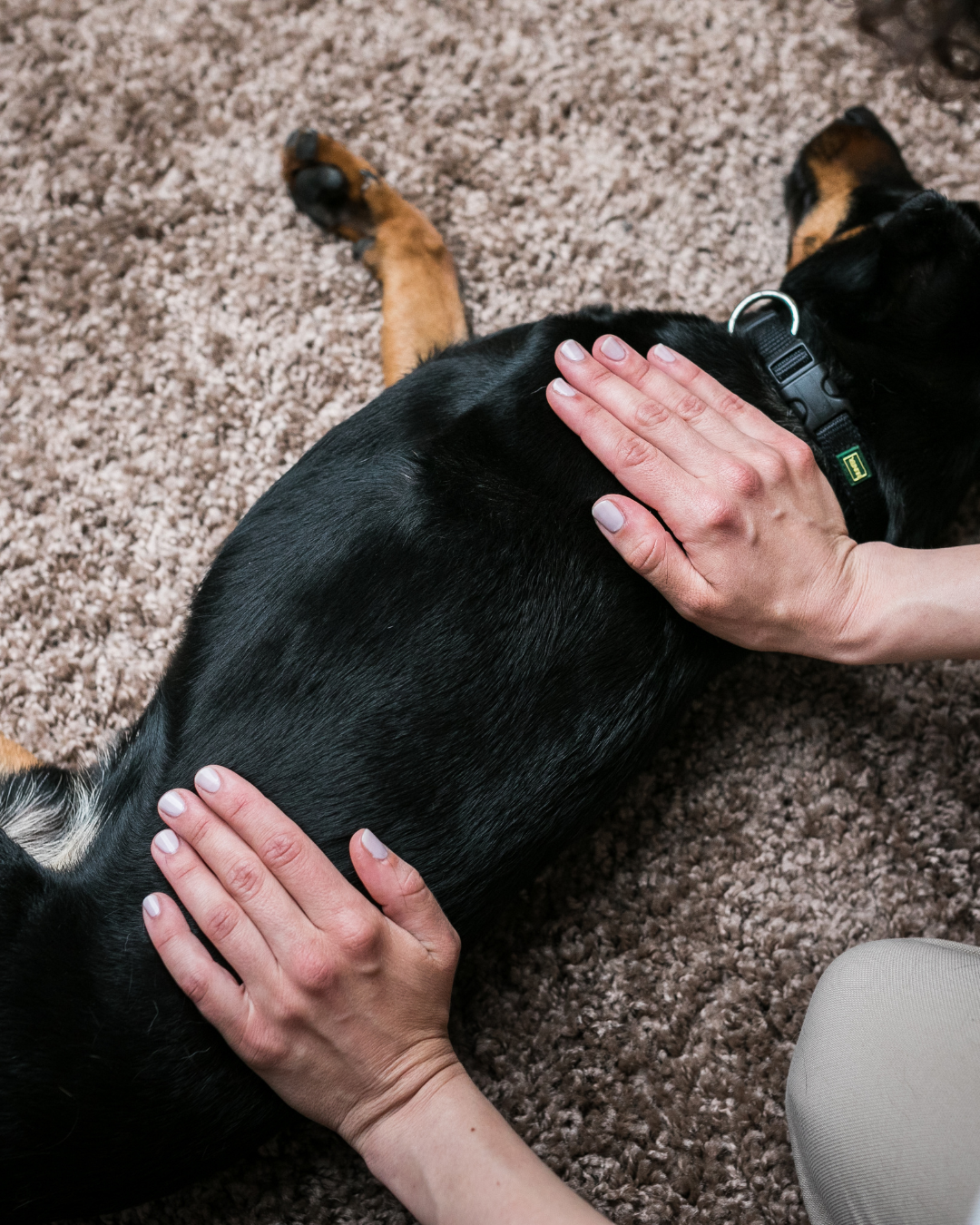
A dog can receive gentle bodywork while standing, sitting, or lying down. You can work with one area of the body rather than trying to complete a full routine, and the session can be broken into smaller pieces if your dog becomes restless. In the beginning, a minute of comfortable interaction may be far more useful than ten minutes spent repeatedly repositioning a dog who would rather leave.
This is where I encourage owners to let go of the idea that the session has to look a certain way. The important question is not whether your dog remains perfectly still. What matters more is whether they appear comfortable with the interaction and whether you are paying attention when their behavior changes.
Over time, many dogs become more familiar with the routine and naturally begin to settle for longer periods. That is very different from holding a dog in place until they eventually stop moving.
Why Some Dogs Find Bodywork Difficult at First
There are many reasons a dog may struggle to settle during canine massage, and not all of them mean the dog dislikes being touched.
Young and active dogs may simply have very little practice being still. If most of their interactions with you involve walking, playing, training, exploring, or asking for attention, a quiet bodywork session may be completely new. Even dogs who love affection can be surprised when everyday petting changes into slower, more deliberate touch.
The environment can play a role as well. A dog who is listening to people outside, watching another pet move around the house, or waiting for the next exciting thing to happen may find it difficult to relax enough to engage with the session.
Other dogs are more sensitive to handling because of previous experiences. Veterinary procedures, grooming, restraint, injury, or simply a history of being touched in ways they did not enjoy can all influence how comfortable a dog feels when someone begins handling their body more intentionally.
There is also an important physical consideration. A dog who repeatedly reacts when you touch one particular area may be telling you that the area is uncomfortable. AAHA notes that pain in dogs may show up through behavioral changes such as irritability, withdrawal, fearfulness, aggression, reluctance to move, or resistance during physical interaction.
That is why it helps to approach restlessness with curiosity rather than frustration. The dog who will not settle is not necessarily being uncooperative. Sometimes they are excited, sometimes they are unsure, and sometimes their behavior may be giving you useful information about how their body feels.
Bodywork Can Become Part of Learning How to Settle
For an excitable dog, bodywork can become more than a physical interaction. The routine itself can provide practice moving from activity into a quieter state.
That does not mean massage should be used as a way to force a dog to calm down. It works much better when the dog is allowed to participate rather than simply being expected to tolerate whatever we decide to do.
A short session may begin with a few seconds of touch followed by a pause. The dog may stand up, reposition, or look around before returning their attention to you. Over time, those brief periods of stillness may begin to last longer because the experience has become predictable and safe.
This overlaps with the principles of cooperative care, which focuses on teaching animals to participate willingly in handling and husbandry rather than relying only on restraint. In cooperative care training, the animal is taught behaviors that signal readiness for touch or a procedure and is also given a way to opt out. The American Veterinary Society of Animal Behavior describes this process as helping animals become active participants in handling rather than simply tolerating it.
Canine massage is not the same thing as a formal cooperative care training program, but the mindset carries over beautifully. You are watching your dog's response, adjusting what you are doing, and building trust around physical handling instead of expecting immediate compliance.
For dogs who have an enormous amount of energy, that can be especially useful. The experience becomes an opportunity to practice slowing down without turning relaxation into another command they have to perform.
Starting With Short, Comfortable Sessions
When introducing canine massage, I prefer to start with what the dog already knows and enjoys.
Choose a time when your dog is relatively calm rather than waiting until they are at their most excited. A quiet period after a walk, later in the evening, or while they are naturally resting may be easier than attempting bodywork when the house is busy or the dog is ready to play.
Begin in an area where your dog is already comfortable being touched. Depending on the dog, that may be around the shoulders, chest, or side of the body. Use gentle, slow contact and spend a short amount of time there before pausing.
At that point, watch what your dog does rather than immediately moving to the next area. If they remain beside you, soften into the touch, or reposition comfortably, you may continue. If they stand up and leave, allow them to do so.
As the routine becomes familiar, you can gradually add time or introduce other areas. The dog will often tell you when they are ready for more.
When Your Dog Walks Away
One of the simplest ways to make canine massage more cooperative is to stop treating walking away as failure.
If your dog gets up in the middle of a session, let them.
That movement may simply mean they need a break, but it can also give you information about what happened immediately beforehand. Perhaps you changed your pressure, moved into a more sensitive area, or stayed in one position longer than they were comfortable with. On the other hand, they may simply have heard a noise in the next room and decided to investigate.
The useful part is noticing the pattern.
A dog who wanders off randomly and comes back a minute later is communicating something very different from a dog who leaves every time you touch the same area. The second pattern deserves more attention because it may suggest that the location, pressure, or type of handling is uncomfortable.
Cooperative care training uses this same idea of paying attention to the moment an animal chooses to opt out. Rather than seeing the decision to move away as disobedience, it can help you identify what changed and adjust the next interaction accordingly.
That mindset takes a lot of pressure off both the owner and the dog. You are not trying to win a battle over how long the session lasts. You are learning how to make the experience easier for the individual dog in front of you.
Growling and Other Signs That Mean Stop
Growling is different from ordinary restlessness, and I think it is important to be very clear about that.
If your dog growls during canine massage, stop touching them and give them space.
A growl is communication. It tells you that the dog is uncomfortable enough to ask for distance, and that signal should not be punished or ignored.
There are dogs for whom hands-on work is not appropriate without additional veterinary or behavioral support. If your dog has a bite history, becomes aggressive with physical handling, or is highly fearful, safety needs to come before massage. Working with your veterinarian and, when appropriate, a qualified behavior professional can help you determine the safest next step.
Massage should never require you to push through obvious distress.
Learning What Relaxation Looks Like in Your Own Dog
Once owners stop expecting a particular response, they often become much better at seeing the quieter ways their dog settles during bodywork.
Some dogs will give you the classic signs. They may lie down, close their eyes, sigh, and become noticeably heavy under your hands.
Others are much subtler.
You may notice that their breathing becomes slower or that they stop scanning the room. Their facial expression may soften, their posture may become less rigid, or they may shift closer to you. A dog who was initially standing may eventually sit, and a dog who was sitting may choose to lie down without being asked.
What matters is the change in that individual dog.
Veterinary rehabilitation uses massage as one of several physical modalities, and VCA notes that therapeutic massage can support circulation, relieve muscle tension, reduce discomfort, and strengthen the bond between the person performing the massage and the animal.
That does not mean every dog will melt dramatically into the floor. Some may simply decide that staying beside you feels good enough to continue.
Learning those individual responses is one of the most valuable parts of working with your own dog because it gives you a much clearer baseline for what comfort looks like for them.
Knowing When Enough Is Enough
A good canine massage session does not have to end because you have worked through every area you planned to address. It can end because your dog has had enough for that day.
If their body becomes more tense as the session continues, they repeatedly move away, turn sharply toward your hands, or become increasingly restless, continuing rarely improves the experience. It usually makes more sense to stop and try again another time.
This is especially important in the early stages. If your dog repeatedly learns that massage continues until they become frustrated enough to leave or protest, the routine can quickly become something they anticipate negatively.
Ending while the dog is still comfortable helps create the opposite association. They learn that the interaction has predictable boundaries and that their signals are noticed.
That is often how longer sessions develop naturally. You are not demanding more patience from the dog every time. You are gradually building a routine that they understand and feel safe participating in.
Canine Massage Is Something You Learn Together
There is a tendency to think of canine massage as a skill the owner learns and then performs on the dog. In reality, it is much more interactive than that.
You are learning how different areas of your dog's body feel, how much pressure is appropriate, what their normal tissue feels like, and how they respond when something changes.
At the same time, your dog is learning what your hands mean in this particular context. They are discovering that the interaction is predictable, that they can change positions, and that you will pay attention when they communicate discomfort.
That is one reason I think bodywork can be especially rewarding with dogs who are initially restless or excitable. Progress may be quieter, but you get to see the relationship change over time. A dog who once stayed with you for twenty seconds may eventually relax for several minutes because they now understand the routine and trust what is happening.
There is no need to rush that process.
Learning Canine Massage at Home With More Confidence
The difficult part for many owners is not wanting to help their dog. It is knowing what to do once they begin.
Even a very willing dog does not automatically tell you where to place your hands, how much pressure to use, how long to work in a particular area, or what you should be noticing beneath the surface.
That is where instruction becomes useful.
VCA notes that while formal full-body therapeutic massage may be best performed by trained professionals, some massage techniques can be taught for appropriate use at home, ideally with guidance from the dog's veterinary healthcare team.
Canine Bodywork Online was created with that same need for guidance in mind. Rather than asking owners to piece together isolated techniques, the program gives them a structured way to learn hands-on support while becoming more observant of their dog's comfort, movement, and response to touch.
And if your dog is the one who currently stays still for only thirty seconds, that is completely fine.
Start with those thirty seconds, listen carefully to what they are telling you, and build from there.